 Legjislacion
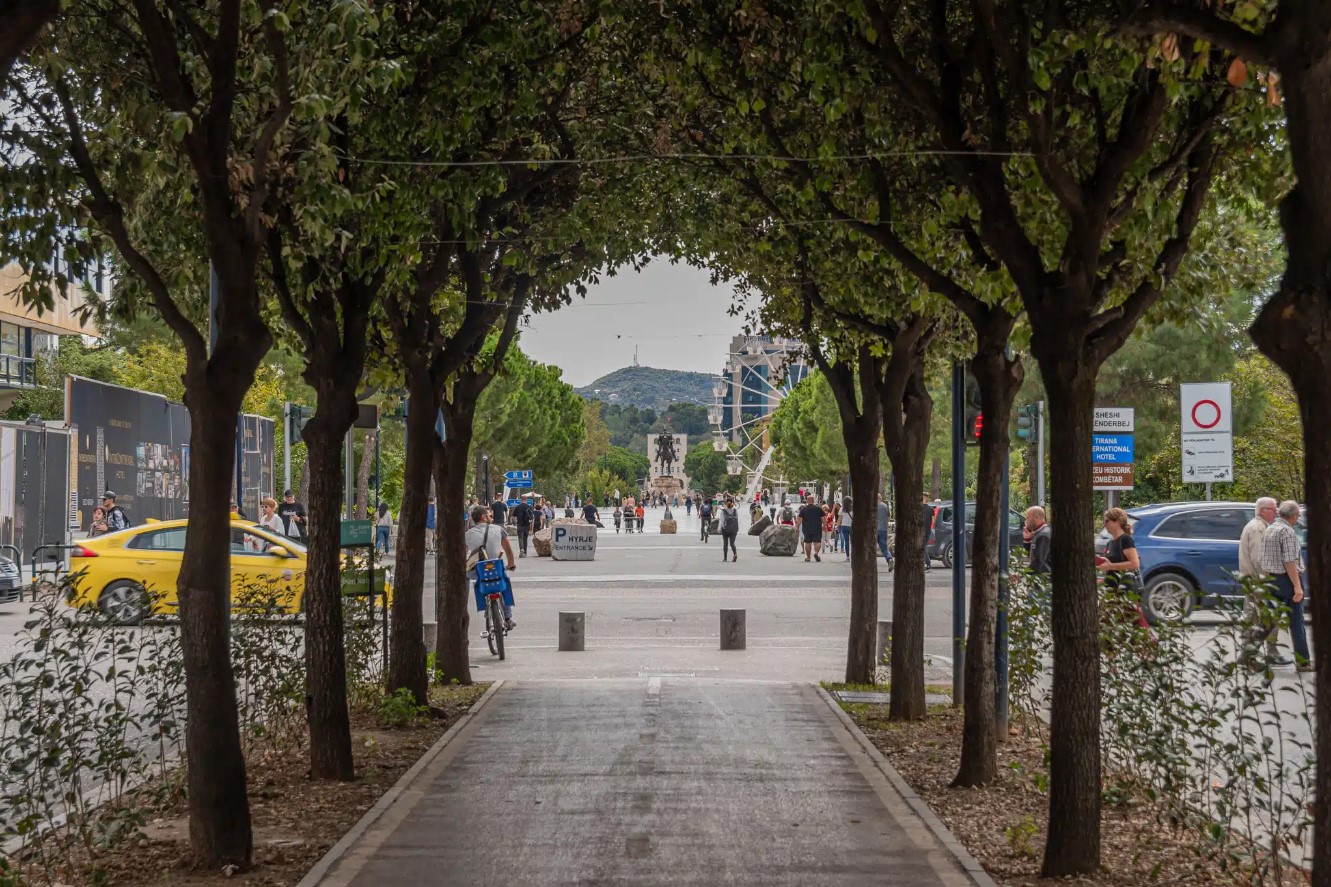
Tirana is entering a new phase of urban organization with a new regulation governing the use of public spaces. The main objective is clear: more space for citizens, more greenery, and a more orderly and accessible city for everyone.
These changes mainly affect how sidewalks are used, how outdoor spaces of cafés and restaurants are organized, and how urban structures are managed throughout the city.
A City for People: The New Urban Philosophy
The new regulation is based on a simple but important idea: public space does not belong to businesses, but to citizens.
The main messages accompanying this reform are:
One of the most distinctive symbols of this approach is the idea of “1 table = 1 tree”, which aims to connect economic activity with urban greening.
The 30% – 70% Rule: Priority for Pedestrians
One of the most significant changes is the clear allocation of space on sidewalks.
According to the regulation:
This approach places pedestrians at the center, ensuring that sidewalks remain passable and functional for everyone.
The 2-Meter Free Corridor: The New Mobility Standard
Another key element of the regulation is the creation of a minimum 2-meter-wide unobstructed corridor in every public space.
This corridor is essential for:
The goal is clear: a city where movement is not obstructed and public spaces are accessible to everyone.
More Greenery in the City
One of the most important pillars of the reform is the expansion of urban greenery.
The principle of “1 table = 1 tree” aims to create a balance between commercial activities and nature within the city. The idea is that every use of public space should contribute to a greener and healthier environment.
Standardization of Structures and Greater Transparency
The new regulation also establishes that:
This aims to create a more unified and aesthetically pleasing urban appearance.
Public Spaces Accessible to Everyone
One of the core principles of the reform is inclusion and accessibility.
Public spaces must be:
This makes the city more welcoming and more functional for everyday life.
Technology in the Service of Transparency: QR Codes in Public Spaces
An interesting innovation introduced by the regulation is the use of QR codes in licensed public spaces.
By scanning the code, citizens can access information about:
Every licensed public space will be accompanied by an identification plaque that increases transparency and public oversight.
A Step Toward a More Organized Tirana
The new public space regulation aims to transform the way the city functions in everyday life.
From freer sidewalks to increased greenery and stronger urban control, the vision is clear: a more orderly, more accessible Tirana that better serves its citizens.
At its core, this reform is not only about new rules, but also about changing the way we experience the city every day.
 AL
AL
 EN
EN
 IT
IT
 ES
ES
 DE
DE
 RU
RU
 EL
EL
 PL
PL
 CS
CS
