AL
AL
 EN
EN
 IT
IT
 ES
ES
 DE
DE
 RU
RU
 EL
EL
 PL
PL
 CS
CS



 Home Decor
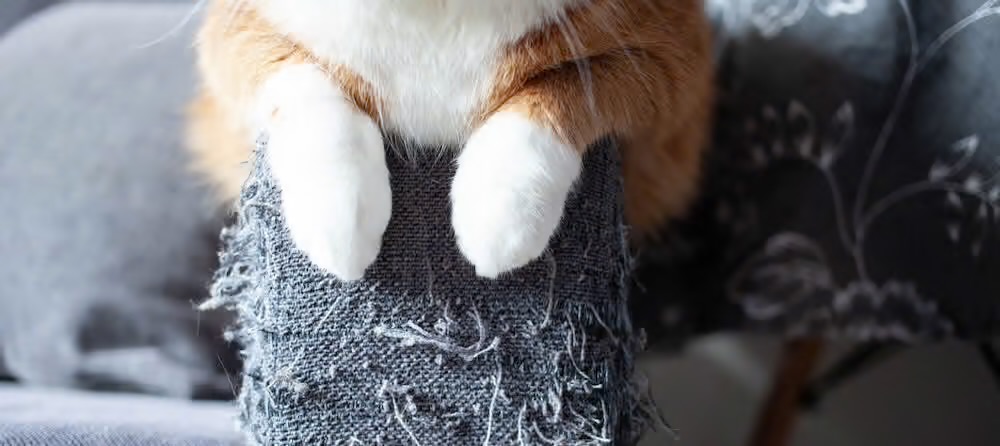
Living with a cat is one of the most enjoyable experiences at home, but it can also be one of the most challenging for your furniture. The sofa often becomes the main victim of a completely natural instinct: scratching.
The good news is that today there are materials that can extend the life of your sofa for years, even if you have an active little “mini tiger” at home.
For a cat, a sofa is not just a piece of furniture. It is territory, a place to relax, and a training station for its claws.
Scratching serves several purposes:
stretching and exercising muscles
removing the outer layer of old claws
marking territory through pheromones
That is why, even when you buy the best scratching post on the market, many cats still prefer the corner of the sofa.
Not all fabrics react the same way to claws. Some give in immediately, while others can withstand years of use.
The best materials have three key characteristics:
dense weave
smooth surface
high resistance to abrasion
The looser the weave, the faster the sofa will deteriorate.
Velvet is not the enemy of cats. In fact, the right type can be highly resistant.
Dense velvet:
does not provide an easy grip for claws
has a smooth, slippery surface
maintains a luxurious appearance
However, be careful: cheaper versions with weaker fibers can wear out quickly.
These are among the most advanced upholstery materials available today.
They are designed for:
scratch resistance
water resistance
reduced pet hair retention
They are often tested using the Martindale standard, which measures durability against abrasion.
Canvas is well known for its durability and is frequently used in high-traffic environments.
Canvas:
contains strong fibers that better withstand daily wear
is less sensitive to light scratching
offers a modern and natural look
For households with pets, canvas is a practical choice because it combines durability with relatively easy maintenance.
If you have a cat, some materials are practically an invitation to destruction:
thin linen
loosely woven cotton
bouclé
fabrics with exposed loops or threads
The softer and looser the structure, the higher the risk of damage.
Even the best material is not enough on its own. You need a complete strategy:
place scratching posts near the sofa
use washable covers
trim your cat’s claws regularly
use anti-scratch sprays
The trick is to offer your cat an alternative that is more attractive than the sofa.
Yes. In most cases, a high-quality sofa:
lasts several times longer
requires less maintenance
reduces replacement costs
In the long run, quality materials are not an expense—they are protection.
The problem is not the cat. It is choosing the wrong material.
With the right combination of dense velvet or technical pet-friendly fabrics, you can have both an elegant home and a happy cat, without sacrificing your sofa.
In the end, the best solution is always a balance between design and practicality.