AL
AL
 EN
EN
 IT
IT
 ES
ES
 DE
DE
 RU
RU
 EL
EL
 PL
PL
 CS
CS
 Information
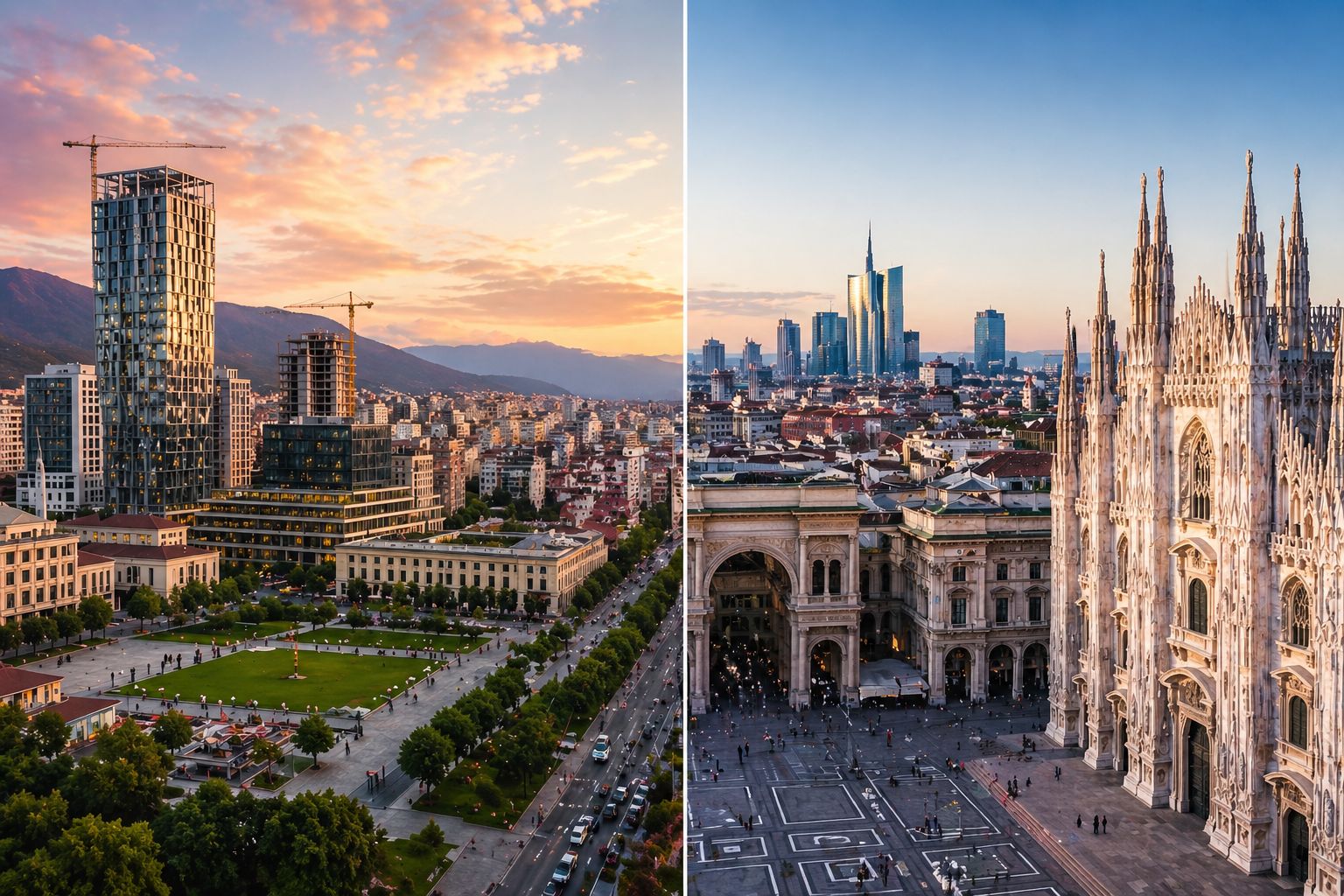
At first glance, the real estate market in Albania appears more affordable than in Italy. Apartment prices are significantly lower in absolute terms, especially when compared to Italian cities. However, a deeper analysis reveals a more complex reality: for many Albanian families, buying a home is proportionally more difficult. In Albania, particularly in major cities like Tirana, average apartment prices in central areas range from €2,000 to €2,500 per square meter, while in newer or more sought-after developments they can exceed €3,000/m². In Italy, prices vary widely depending on the city, but in urban centers such as Milan or Rome, they typically range from €4,000 to over €8,000/m². However, the key difference lies in income levels. According to data from Numbeo, the average monthly net salary in Italy is around €1,800–€2,500, while in Albania it remains about €600–€800. This means that although property prices are lower in Albania, purchasing power is significantly more limited. A key indicator is the price-to-income ratio, which shows how many years of work are needed to buy an average apartment. In Italy, this ratio typically ranges from 10 to 15 years. In Albania, it often reaches 15–20 years or more, especially in high-demand urban areas. In relative terms, this places a heavier financial burden on Albanian households. Financing conditions also differ significantly. Italy’s banking system offers mortgage loans with lower interest rates and longer repayment periods, while in Albania access to credit is more limited, often requiring formal income and higher down payments. This makes entering the housing market more difficult, especially for young buyers. The rise in property prices in Albania is driven by several factors: rapid urbanization, strong demand in cities, construction investments, and the use of real estate as an investment asset. Meanwhile, in Italy, the market is more mature, and prices are more closely linked to economic fundamentals and income levels. This creates a clear contrast: in Italy, housing is expensive but relatively aligned with income levels and financing access. In Albania, although prices are lower, they are harder to afford relative to wages. If these trends continue, the Albanian market may face significant challenges, including reduced housing accessibility and increased pressure on rental prices. In this context, comparing Albania with Italy is no longer just about prices, but about real purchasing power and the ability of households to secure stable housing.