 Informacion
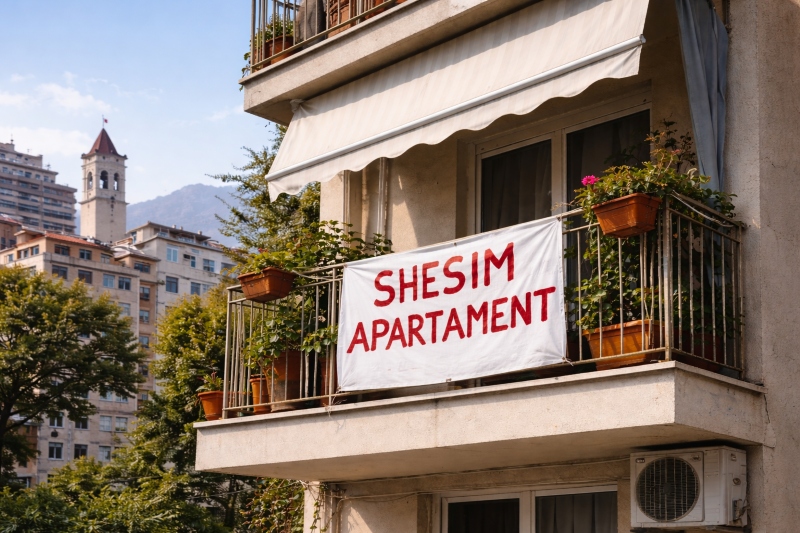
Real estate marketing in Albania has gone through a rapid, though not always well-structured, evolution. In the 1990s and early 2000s, property sales relied mainly on personal connections, word of mouth, and minimal advertising—such as handwritten signs on building façades or A4 sheets posted on streetlight poles. It was a simple and direct form of communication that worked in a market that was still unorganized, lacking information, standards, and real guidance for buyers.
With time and technological development, the market was expected to gain more structure and clarity. However, online portals took the dominant role and, for many years, turned into a clutter of listings. On the same platform, one could find an apartment for sale, a used car, a plot of land, or an offer completely unrelated to real estate. Property lost its weight as a strategic product and was treated merely as another listing among dozens of others.
On these portals, the same property often appeared multiple times, with different prices and descriptions, without verification or accountability. Terms such as “luxury,” “super offer,” or “unique opportunity” were used indiscriminately and gradually lost their meaning. Instead of helping users understand the market, these platforms created confusion, wasted time, and eroded trust. Marketing became about volume and noise rather than information.
Even today, this logic is still present. The form has changed, but the problem remains the same: fragmented, anonymous, and unfiltered information. This shows that the core challenge has not been the lack of technology, but the lack of standards in how property is presented and structured online.
Modern real estate marketing places user experience at the center. A listing serves an orienting role: it explains, clarifies, and supports the decision-making process. Transparency, structured information, and trust are the key elements of contemporary real estate communication.
In this context, Kërko360 represents a clear cultural shift in real estate marketing. Not merely as an online platform, but as a new standard. From randomly distributed ads to structured listings with clear, verifiable, and comparable information. From chaos to real market orientation.
The difference between real estate marketing in the 1990s and today is not only technological—it is philosophical. From improvisation and scattered ads to clarity and responsibility in information. Today, real estate marketing is measured by how well it helps people make informed decisions, and this is precisely where the future of the Albanian real estate market lies.
 AL
AL
 EN
EN
 IT
IT
 ES
ES
 DE
DE
 RU
RU
 EL
EL
 PL
PL
 CS
CS